Beef Organ Supplements and Pregnancy: Understanding Vitamin A Safety
There's a quiet anxiety many expectant mothers feel when they look at their supplements. Is this safe for my baby? With vitamin A, that anxiety is worth taking seriously. Too much matters. But so does too little.
By Niall Kiddle, Founder, Organised

Reviewed by Pedro Rodrigues, Agronomist (farming and sourcing only) ·
7 min read · Published · Updated · 3 cited sources
Makers of the Organised Daily blend, a grass-fed beef organ supplement from regenerative UK farms

Vitamin A is absolutely essential for fetal development. It controls cell differentiation, which means it determines which cells become eyes, which become heart tissue, which become lungs. A deficiency in pregnancy increases the risk of miscarriage, birth defects, and impaired immune system development in the baby. And yet, excessive vitamin A intake, particularly in the form of retinol, has been associated with birth defects and developmental issues. The conversation isn't simple.
Why vitamin A matters in pregnancy
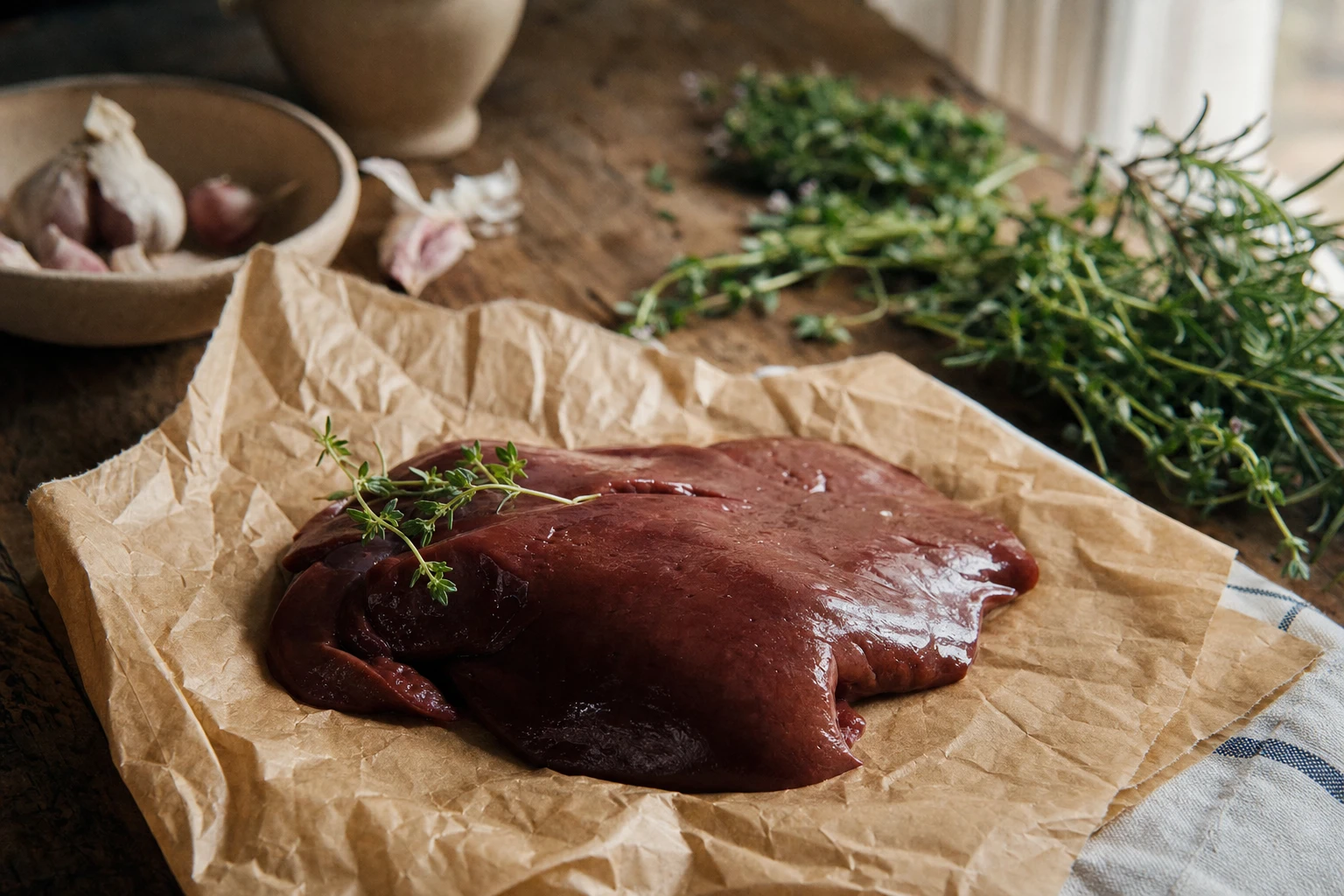
Your baby's developing organs depend on vitamin A. During the first trimester, when organogenesis (the process of organs forming) is happening most rapidly, vitamin A is literally controlling which cells specialise into which tissues.1 Your baby's eyes, ears, heart, lungs, and nervous system are all being sculpted partly by the vitamin A your body delivers to them.
During pregnancy, your vitamin A requirements increase, but not by an enormous amount. The recommended dietary allowance is 770 micrograms for pregnancy, compared to 700 micrograms for non-pregnant women. The difference is modest, but it's real.
Deficiency in pregnancy is a serious concern, particularly in developing countries where malnutrition is prevalent. But in the UK, where most people have access to reasonable food, deficiency is uncommon. The real concern for expectant mothers here is overconsumption from supplements and fortified foods.
Retinol vs beta-carotene: the critical difference
This is where the conversation becomes important. There are two forms of vitamin A: preformed vitamin A (retinol) and provitamin A (beta-carotene). They are not the same.
Retinol is the active form. It's what your body uses immediately. It comes from animal sources: liver, fish oils, eggs, butter, and full-fat dairy. Retinol is what's in most prenatal supplements. And retinol is what has toxicity concerns in pregnancy. When you ingest retinol, your body doesn't down-regulate how much it absorbs based on your needs. You take 10,000 IU, your body absorbs and uses as much as it can. Too much retinol crosses the placenta and potentially causes teratogenic effects, meaning effects that harm fetal development.
Beta-carotene is the precursor. It's the form found in orange and red vegetables: carrots, sweet potatoes, pumpkin. Your body converts beta-carotene into retinol only as much as it needs. If you eat a carrot and you already have enough vitamin A, your body doesn't convert all of it. The excess is stored and excreted. This is a safety mechanism. There is no documented case of beta-carotene toxicity in pregnancy, even from massive consumption of orange vegetables.
Retinol is preformed vitamin A from animal sources. Beta-carotene is provitamin A from plant sources. They work differently in your body, and pregnancy safety concerns apply specifically to retinol, not to beta-carotene.
Understanding the 10,000 IU limit
Most pregnancy guidelines recommend limiting preformed vitamin A (retinol) to no more than 10,000 IU daily.2 Some guidelines are more conservative and suggest 3,000 to 5,000 IU as a precautionary limit. This is where expectant mothers get confused because some older literature recommends much higher intakes, and some prenatal supplements contain significant amounts of retinol.
The concern emerged from animal studies and a small number of human case reports showing that excessive retinol intake during pregnancy can increase the risk of certain birth defects.3 The evidence isn't massive, but it's consistent enough that healthcare providers take it seriously. The upper limit of 10,000 IU daily represents an amount that's believed to be safe based on available evidence, but staying under it is prudent.
Here's what matters: if you're eating a varied diet that includes some liver, eggs, butter, and dairy, you're getting retinol. If you're also taking a prenatal supplement that contains retinol, you could exceed 10,000 IU daily without realising it. The combination approach requires attention.
Whole food vs supplements
Beef organ supplements, particularly desiccated liver capsules, are increasingly popular among pregnant women looking for concentrated nutrition. A single capsule of desiccated liver powder contains the nutritional equivalent of a small amount of fresh liver. If you take two or three capsules daily, you're getting the equivalent of roughly 20 to 30 grams of fresh liver.
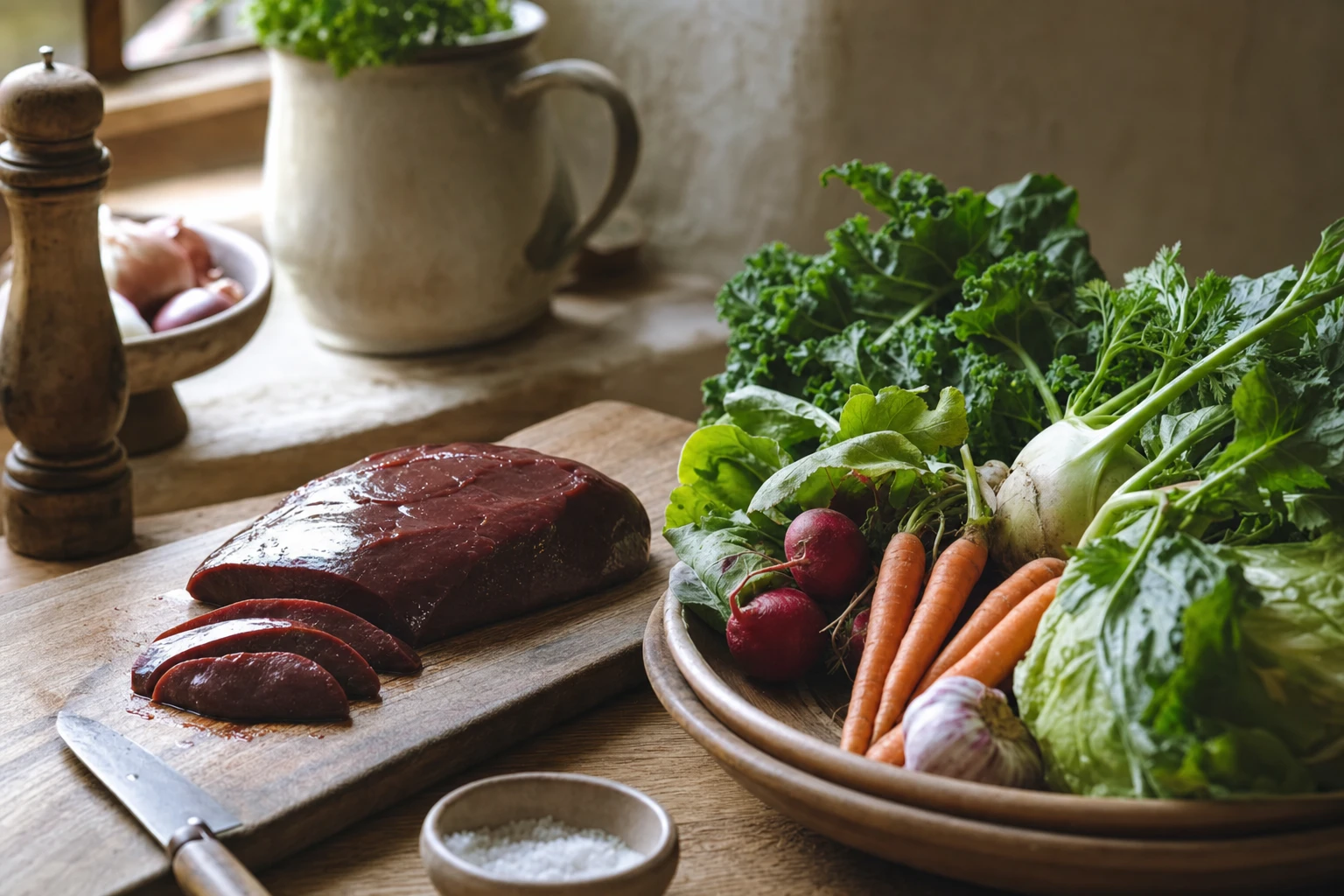
A 100-gram serving of fresh beef liver contains approximately 27,000 IU of vitamin A.1 So 20 grams of fresh liver contains about 5,400 IU. Add a prenatal supplement that contains 4,000 IU of retinol (common in many formulas), and you're at 9,400 IU daily, right at the upper limit.
The issue is that desiccated organ supplements concentrate the nutrients. You're getting vitamin A, B12, iron, choline, and other nutrients in a form that's easy to consume. But easy consumption can lead to inadvertent overconsumption. With fresh liver, the volume of food naturally limits how much you can eat. With capsules, you can take six capsules before breakfast without thinking much about it.
Fresh beef liver is safer than supplemental organ capsules during pregnancy because the volume of food naturally limits consumption. If you want the benefits of liver, consider eating small amounts of fresh liver once or twice a week instead of taking capsules daily.
Get life-stage nutrition guides, free
Two short reads a week on eating well through pregnancy, childhood and older age.
Unsubscribe anytime.
When organ supplements make sense
There are situations where beef organ supplements during pregnancy make sense, but they require attention to the retinol content.
If you're vegetarian or vegan and have limited access to animal sources of vitamin A, a modest dose of organ supplements can help you hit your targets. But you need to coordinate with your healthcare provider and choose a product that clearly states its retinol content. Many desiccated liver products don't disclose the vitamin A content precisely, which makes it hard to stay within safe limits.
If your prenatal supplement contains no retinol (some now use only beta-carotene to avoid this concern), then a small amount of beef organ supplementation is less risky because you're not combining two retinol sources.
If you're someone who cannot tolerate the taste or texture of fresh liver, organ capsules offer a compromise. In that case, discuss with your midwife or GP the specific product you're considering. They may recommend a modest dose combined with a retinol-free prenatal supplement.
Talking to your midwife
The safest approach is transparency. Bring your prenatal supplement and any organ supplements you're considering to your midwife or GP appointment. They can review the labels and give you specific guidance based on the actual retinol content. This isn't a conversation to have casually. Your healthcare provider needs to know what you're taking.
Your midwife or GP will also consider your overall diet. If you're eating liver regularly already, they may advise against additional supplementation. If you're not eating liver or other rich vitamin A sources, they may recommend a small amount of supplementation. The guidance depends on your whole picture, not just the supplements in isolation.
If you're in early pregnancy, this conversation is worth having sooner rather than later. If you've already been taking supplements at higher doses and you're worried, don't panic. Isolated periods of higher retinol intake are less concerning than chronic overconsumption. But moving forward, it's worth adjusting.




1 of 9
Daily blend
200,000+ thriving families4.9 on Trustpilot
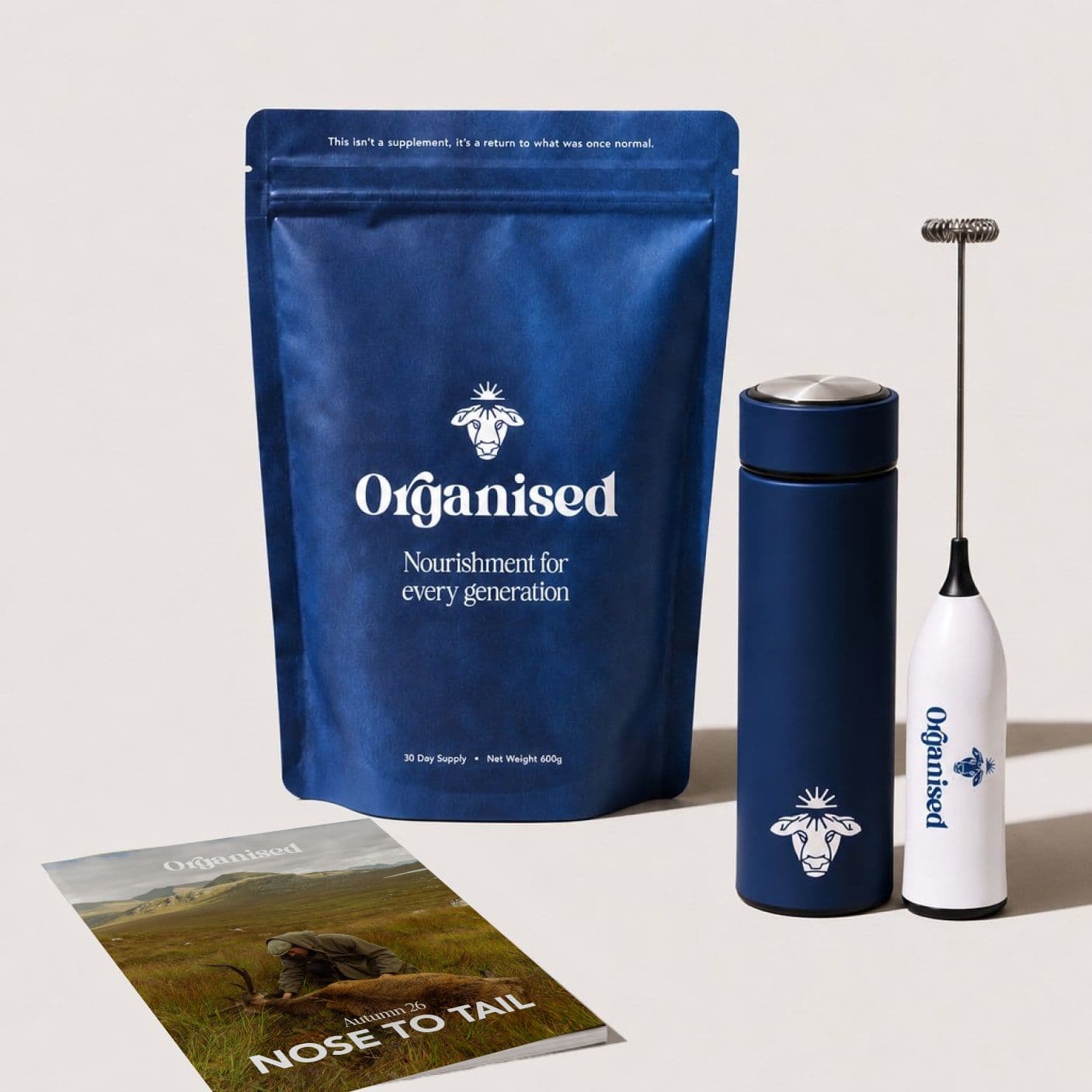
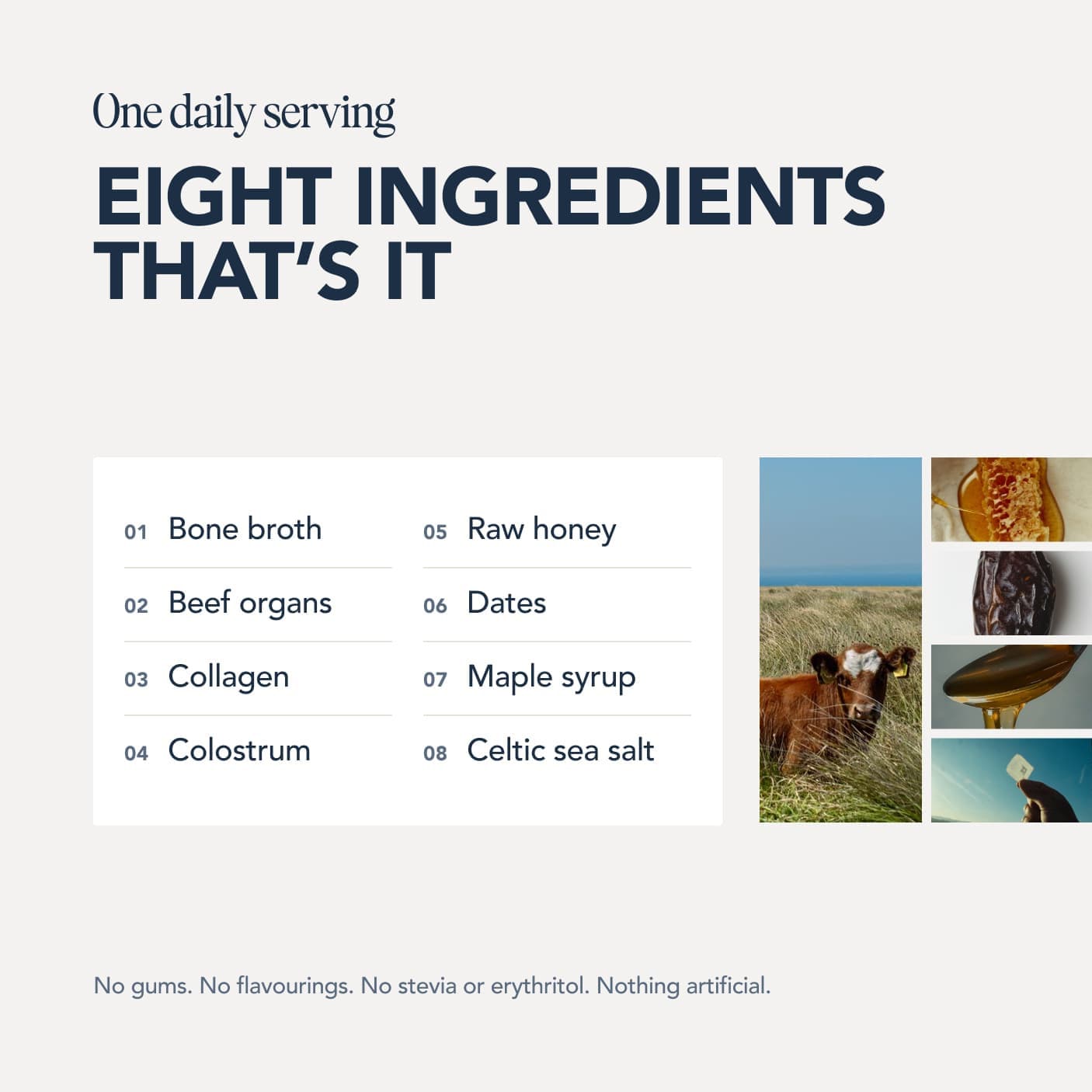
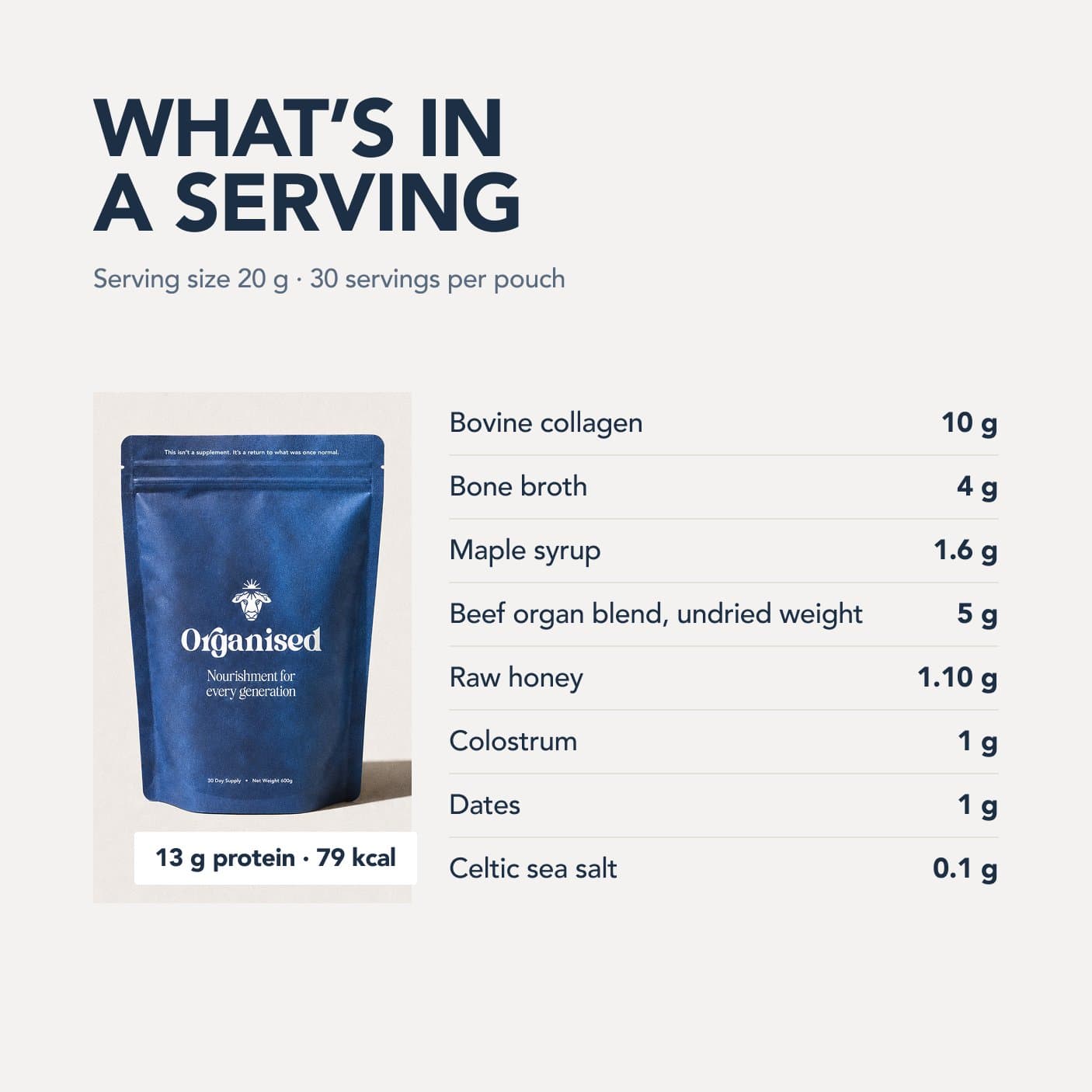
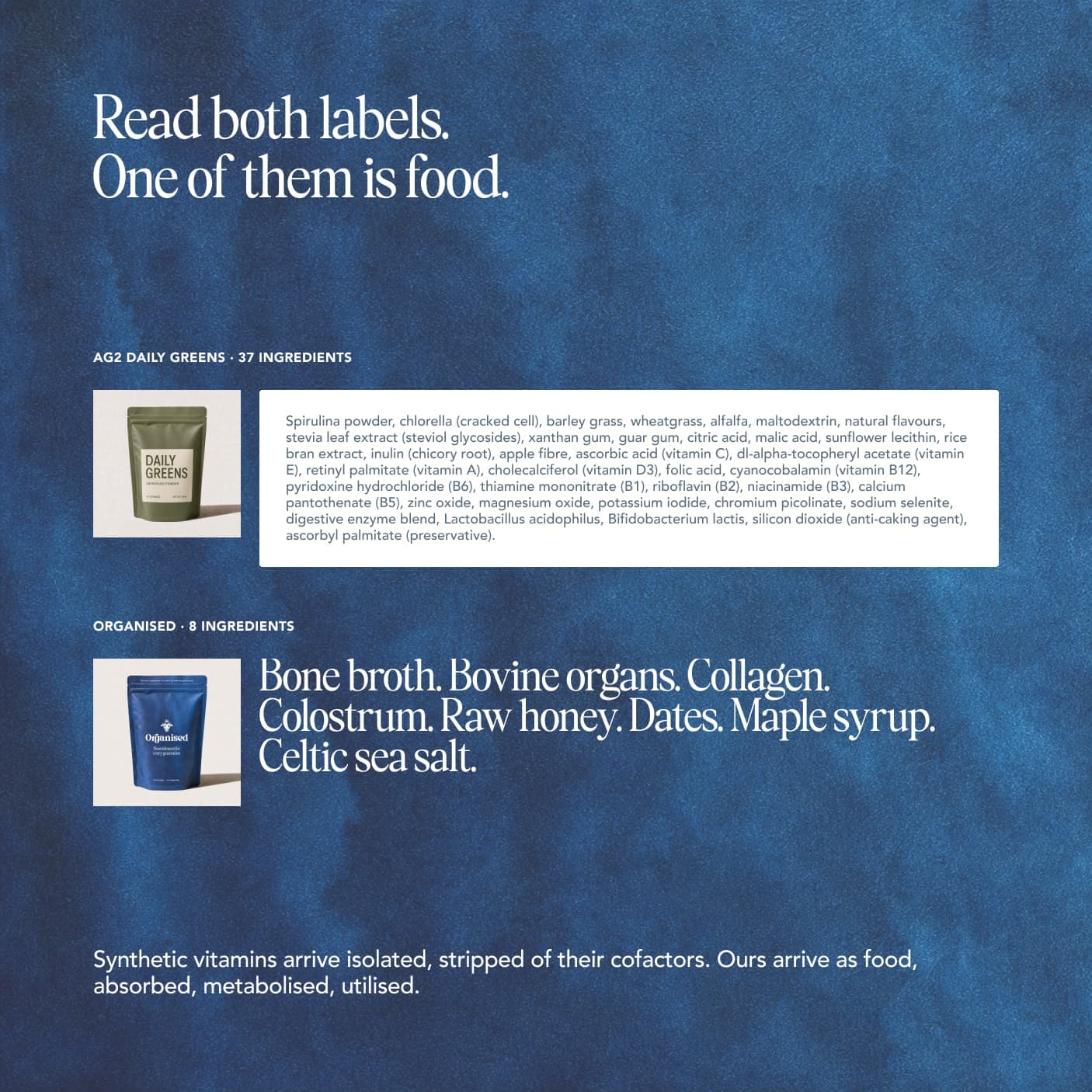
Eight real ingredients built around grass-fed beef organs, collagen and colostrum. Nothing synthetic added.
Free with your first order, worth £38. Plus £10 off the pouch with a subscription.


Free UK shipping · Made in England · 100 day money back guarantee on your first pouch · Skip, pause or cancel anytime
The case for whole food over supplements
Here's the argument for prioritising fresh organ meat over supplements: when you eat fresh liver, you naturally limit how much you consume. You're unlikely to eat 200 grams of fresh liver daily. It's too much food. Too much flavour. Too much texture. Your appetite naturally regulates intake.
With capsules, the opposite happens. They're easy to swallow. They have no taste. You can take six capsules without feeling like you've eaten anything. This makes overconsumption easier without realising it.
Additionally, fresh liver contains the vitamin A in a food matrix alongside other nutrients. You're getting B vitamins, iron, choline, selenium, and copper alongside the vitamin A. Your body processes this matrix differently than isolated retinol. The whole food approach is theoretically safer and nutritionally superior.
If you can eat fresh liver, even small amounts weekly, your vitamin A needs are met. A 30-gram serving once weekly provides substantial vitamin A without pushing into the upper limit. If liver is genuinely intolerable, organ supplements become reasonable, but supplements should remain the second choice, not the first.

The bottom line
Beef organ supplements can be a valuable source of concentrated nutrients in pregnancy, but vitamin A in the retinol form requires careful attention. The 10,000 IU daily limit exists for a reason. Your baby's development depends on the right amount of vitamin A, neither too little nor too much. If you're considering organ supplements, discuss them with your midwife or GP, and be honest about everything else you're taking. Your healthcare provider isn't there to judge your choices. They're there to help you navigate the uncertainty. That conversation is worth having.
References
Every source below was checked on 27 August 2026. Each PubMed, PMC and DOI identifier was resolved against NCBI or Crossref, and what it opens is printed under the citation, so you can see the link goes where the citation says without leaving the page. Where a citation and its identifier disagreed, the citation was corrected to the record or the reference was deleted along with the sentence marker that pointed at it, and where the resolved paper turned out not to support the sentence, the sentence was cut back to what it does support. Borrowed authority is worse than none, because it looks like rigour.
- National Institutes of Health, Office of Dietary Supplements. Vitamin A and Carotenoids (Health Professional Fact Sheet). https://ods.od.nih.gov/factsheets/VitaminA-HealthProfessional/ [accessed May 2026].
- NHS. Vitamins, supplements and nutrition in pregnancy. https://www.nhs.uk/pregnancy/keeping-well/vitamins-supplements-and-nutrition/ [accessed May 2026].
- Rothman KJ, Moore LL, Singer MR, et al. Teratogenicity of high vitamin A intake. N Engl J Med. https://pubmed.ncbi.nlm.nih.gov/7477116/ [accessed May 2026].Checked 27 August 2026: PMID 7477116 opens Rothman KJ, Moore LL, Singer MR et al, Teratogenicity of high vitamin A intake. N Engl J Med 1995;333(21):1369-73.
Who wrote and reviewed this guide
Who wrote and reviewed this guide
Niall Kiddle
Author · Founder, Organised
Niall is the founder of Organised. He started the company in 2024 after fixing his own health the slow way: in 2022 he swapped a cupboard of synthetic supplements for real food, raw milk, organ meats, bone broth and honey, and felt the difference within months.
Areas of expertise: Ancestral nutrition, Organ meats, Whole-food supplementation, Gut health, Regenerative sourcing
Read Niall's full profile
Pedro Rodrigues
Reviewer · Agronomist (farming and sourcing only)
Pedro is the agronomist Organised works with on farming and sourcing. His job on the guides is to keep the science honest: he reviews what we publish about soil health, regenerative agriculture, grazing and the way food is actually produced.
Areas of expertise: Regenerative agriculture, Agronomy, Soil health, Grass-fed farming, Food sourcing
Reviewed this guide on
Read Pedro's full profileMore on pregnancy & postpartum
View allMore on pregnancy & postpartum
View all- Nourishing Pregnancy with Whole Food Nutrition
- Postpartum Recovery Nutrition: Rebuilding After Birth
- Breastfeeding and Nutrition: What to Eat to Nourish Two
- Folate vs Folic Acid: Why the Form Matters in Pregnancy
- Gestational Diabetes and Nutrition: What Helps and What Doesn't
- Iron Needs During Pregnancy: Why Heme Iron Makes a Difference
- Morning Sickness and Nutrition: What Helps and What Makes It Worse
- Pregnancy Nutrition on Reddit: What Real Mums Recommend vs the Evidence
- Pregnancy Prep: Nutritional Foundations to Lay Before Conceiving
- Rebuilding Your Iron Stores After Birth
- The Best Foods to Eat in Each Trimester
- The Fourth Trimester: Why Mothers Need Organ Nutrition
Browse the guides library
All guidesBrowse the guides library
All guidesKeep reading
Life stage
Nourishing Pregnancy with Whole Food Nutrition
Discover essential nutrients for pregnancy: fat-soluble vitamins, B12, choline, iron, and DHA. Evidence-based whole food approach for expectant mothers.

Life stage
Folate vs Folic Acid: Why the Form Matters in Pregnancy
Understand the difference between folate and folic acid, MTHFR genetics, and why the form matters for your pregnancy. Food sources and supplement guidance.

Life stage
B12 Absorption Declines with Age: Here's What to Do
By 50, your stomach is producing less acid and intrinsic factor. Standard B12 intake isn't enough. Here's how to ensure your body actually gets it.
Real food, made easy
Find my daily blendA few ways to use it
All recipesA few ways to use it
All recipes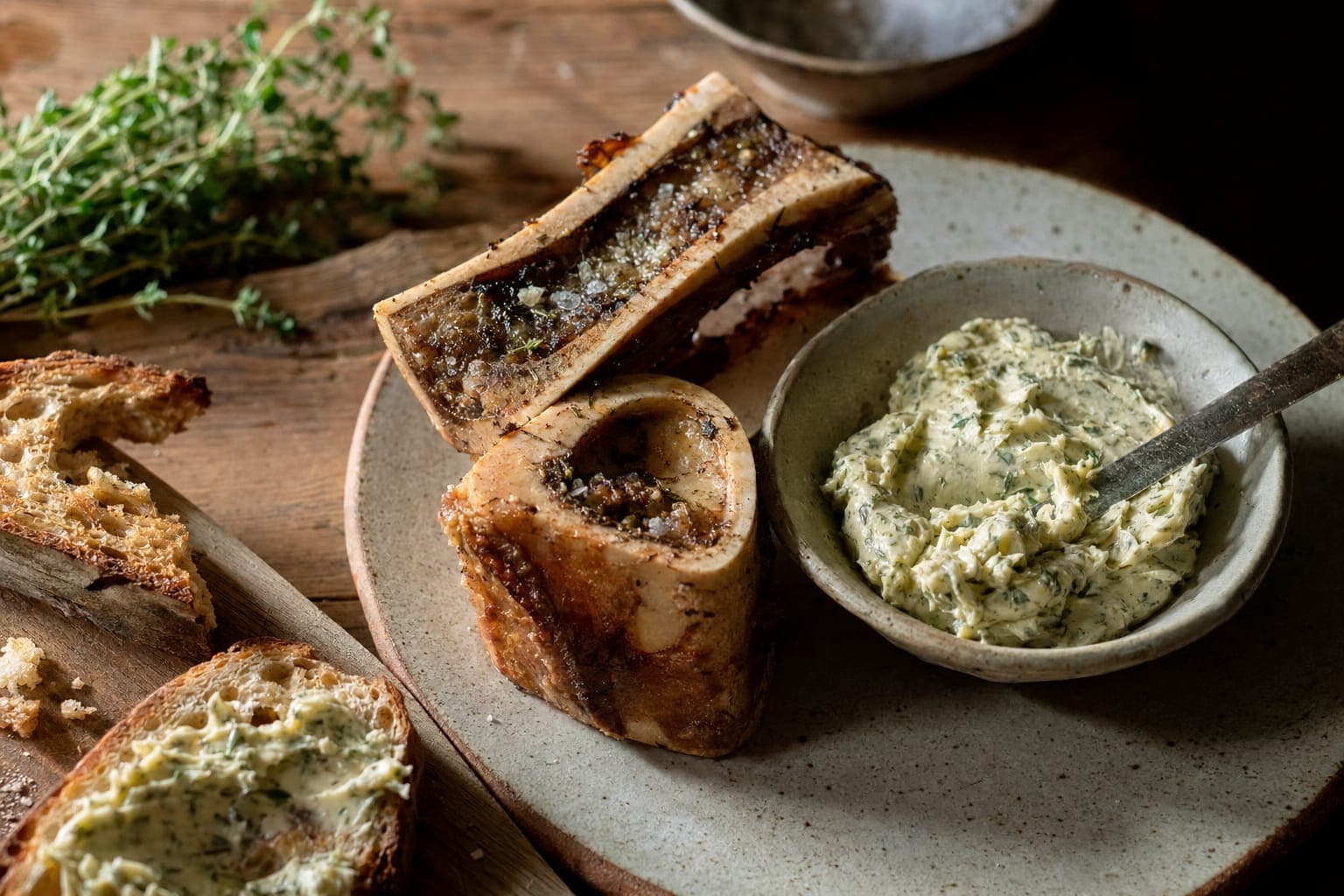
How to Make Bone Marrow Butter
Roast grass-fed marrow bones, scoop the marrow, and mix with butter and herbs. A nutrient-dense spread with fat-soluble vitamins.

Gut-Healing Marshmallows with Collagen and Raw Honey
Learn to make gut-healing marshmallows with collagen and raw honey. A shareable treat that sneaks nutrition into every bite. Easy recipe with video tips.

Collagen-Rich Beef Stew: Slow-Cooked Nourishment
Beef stew that delivers collagen from connective tissue and bone broth. Winter comfort food that actually nourishes. Simple slow cooker recipe.


 Join over 200,000+ members
Build a better food system with us
The Organised community is thousands of people choosing real food and backing the farmers who grow it, all of us trying to leave the world a little better than we found it. If that is what you care about too, you belong here.